Reasoning and Learning Lab
Division of AIICS · Department of Computer Science (IDA)
Linköping University, Sweden
We develop hybrid AI systems that combine machine learning, reasoning, and planning to create trustworthy, safe, and robust AI for real-world applications, from autonomous systems and healthcare to education and public safety.
About the Lab
The Reasoning and Learning Lab (REAL) is a research unit within the Division of Artificial Intelligence and Integrated Computer Systems (AIICS), Department of Computer and Information Science (IDA), Linköping University.
Our research combines learning, reasoning, and planning to build AI that is safe, robust, fair, and explainable. Core themes include trustworthy AI, autonomous systems, AI fairness and explainability, and stream reasoning, with applications in healthcare, public safety, transport, and language technology. We build systems designed to operate reliably in complex, real-world environments.
The lab is led by Professor Fredrik Heintz, who also serves as Head of the AIICS Division, Director of WASP's Graduate School, Program Director of WASP-ED, Coordinator of the EU TAILOR network and TrustLLM project, and Director of LiU's AI initiative.
Research Areas
Trustworthy AI
Developing AI systems that are safe, fair, transparent, and robust. Coordinator of the EU TAILOR network and the TrustLLM project for open European language models.
Autonomous Systems
Motion planning, trajectory modeling, and runtime monitoring for autonomous robots and drones with safety guarantees. Collaborative projects with Saab, Ericsson, and Swedish Transport Administration.
Stream Reasoning
Real-time reasoning over continuous data streams for time-critical applications, combining formal methods with probabilistic approaches for anomaly detection and decision support.
Applied AI & Education
Deploying AI in healthcare, transportation, logistics, and public safety. Leading national AI education initiatives through WASP-ED and AI Academy.
Neuro-Symbolic AI
Bridging learning and reasoning: combining neural networks with symbolic knowledge representation for systems that generalize, explain, and verify their decisions.
Cybersecurity & Resilience
Developing AI resilient to adversarial attacks. Hosting the national SSF RESIST center (SEK 60M) for cyber-resilient AI systems.
Selected Projects
National center for developing resilient AI systems, protected against cyberattacks. SEK 60 million. Directed by Fredrik Heintz.
Developing a trustworthy, open, and sustainable large language model for European languages including Swedish.
European collaboration building open LLMs via the ALT EDIC consortium.
Multiple PhD and postdoc projects funded by the Wallenberg AI, Autonomous Systems and Software Program, including WARA, NEST Cybersecurity, and NEST WISE initiatives.
Dynamic multi-robot planning and adaptive autonomous systems for industry and transportation.
Wallenberg Transformative Technologies Education Development Program. Transforming university education with AI across Sweden.
The lab currently manages 25+ active funded projects from funders including WASP/KAW, EU Horizon, SSF, Vinnova, VR, ELLIIT, and LiU strategic initiatives.
People
Faculty




Postdocs




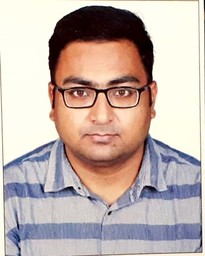

PhD Students





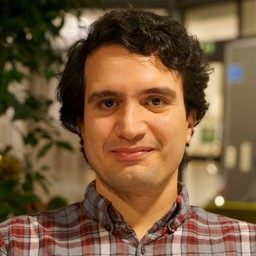


Staff



AI Academy Partnership Program

AI Academy


Alumni
News
- 2026-02 SSF RESIST center announced: SEK 60 million to protect AI systems from cyberattacks, directed by Fredrik Heintz.
- 2026 Sanjay Chakraborty et al. publish A survey of AI-supported materials informatics in Computer Science Review.
- 2025-10 Emil Wiman & Mattias Tiger publish Safe Lattice Planning for Motion Planning with Dynamic Obstacles at IROS 2025.
- 2025-03 Md Fahim Sikder defends PhD thesis: Representative Synthetic Data for Fair Decision Making.
- 2023 TrustLLM launched: EU Horizon-funded project to develop a trustworthy, open large language model for European languages.
Open Positions
The lab regularly recruits PhD students, postdoctoral researchers, and research engineers. As a Swedish public university, Linköping University is required to advertise all positions openly and select candidates through a competitive, merit-based process. We are unable to make individual hiring decisions at the lab level. All recruitment is handled centrally by the university.
Current openings in our group and across the Department of Computer and Information Science (IDA) are listed on the university's vacancies page. To find positions relevant to us, filter by IDA and look for topics in AI, machine learning, autonomous systems, or cybersecurity.
Why Join Us
Linköping University (LiU) is ranked #43 globally in AI, #12 in Europe, and #1 in Sweden. LiU hosts WASP, Sweden's largest individual research programme (SEK 6.5 billion), and our faculty lead its graduate school. Three supercomputers and one of seven European AI Factories sit on our campus. PhD students and postdocs are salaried employees with full benefits and no tuition fees.
Sweden is the #2 most innovative country in the world (WIPO 2025), #1 in the EU (European Innovation Scoreboard 2025), and #2 globally for prosperity and quality of life (Legatum Prosperity Index 2025).
Research Environment
Linköping University was home to Sweden's first professor of Computer Science (1975) and has been at the centre of Swedish AI research for five decades. Our division, AIICS, holds Centre of Excellence status with dedicated strategic funding for recruitment and early-career researcher development. The lab leads the national SSF RESIST centre (SEK 60M) for cyber-resilient AI and coordinates TrustLLM, the EU project building open, trustworthy large language models for European languages.
LiU is the host university for WASP (the Wallenberg AI, Autonomous Systems and Software Program), by far Sweden's largest individual research programme (SEK 6.5 billion). Our lab director leads WASP's Graduate School and WASP-ED, and lab faculty serve on its management. WASP offers a graduate school, international summer schools, industry connections with 80+ companies, and a cross-university community of 600 PhD students across Sweden.
Compute Infrastructure
LiU hosts Sweden's National Supercomputer Centre (NSC) and the national compute infrastructure NAISS, serving 7,500 researchers at 30 universities. Three major systems sit on campus, all within walking distance of the lab:
- Berzelius, Sweden's fastest AI supercomputer (NVIDIA GPU cluster, Wallenberg Foundation)
- Arrhenius, EuroHPC supercomputer, top-5 in Europe (~40 petaflops)
- Mimer, one of seven European AI Factories (EU, announced 2024)
Industry and Innovation
Linköping is a defence, aerospace, and tech hub. Saab is headquartered here, Ericsson has a major site, and Linköping Science Park (adjacent to campus, with 45+ nationalities) provides immediate industry collaboration and career opportunities. The city won the EU's iCapital innovation award. LiU research has produced 70+ spin-off companies including Sectra, Tobii, and Neo4j.
Working in Sweden
PhD students and postdocs at Swedish universities are salaried employees with full benefits. There are no tuition fees for doctoral studies. Employment includes pension contributions, 28+ days of paid vacation, and government-funded universal healthcare (co-pays are nominal, capped at ~SEK 1,550/year). Sweden offers among the most generous parental leave globally (480 days shared between parents), with affordable, high-quality childcare. Spouses of employees receive work permits. Only 1% of Swedish employees work very long hours, compared to 10% across the OECD.
Linköping is a mid-sized city (~165,000) with significantly lower living costs than Stockholm or Gothenburg, short commutes, and direct trains to Stockholm in under 2 hours.
Sweden at a Glance
| #2 globally | Most innovative country (WIPO GII 2025) |
| #1 in the EU | Innovation leader (European Innovation Scoreboard 2025) |
| #2 globally | Prosperity and quality of life (Legatum Prosperity Index 2025) |
| #1 globally | Researchers per capita (WIPO GII 2025) |
| 99/100 | Freedom score (Freedom House 2025) |
| #6 globally | Gender equality (WEF Global Gender Gap 2025) |
Contact
REAL AI LAB · Reasoning and Learning
Division of AIICS
Department of Computer and Information Science (IDA)
Linköping University
SE-581 83 Linköping, Sweden
Lab Director
Prof. Fredrik Heintz
fredrik.heintz@liu.se
Deputy Head of Lab
Dr. Mattias Tiger
mattias.tiger@liu.se